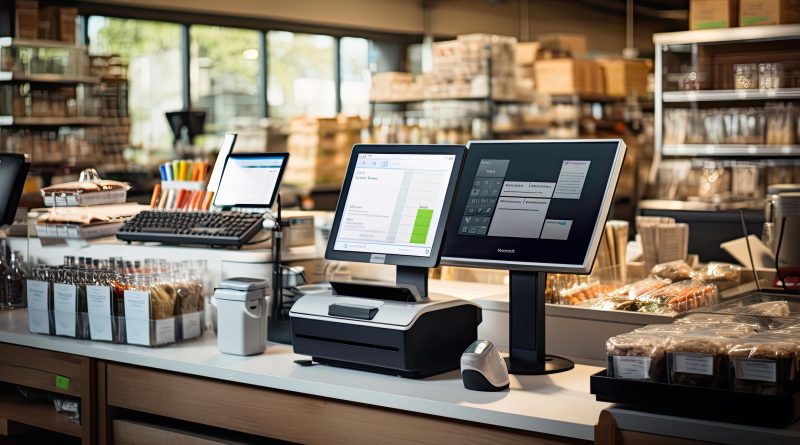
7 Benefits of Unifying Your ERP and POS Systems
Retailers that run enterprise resource planning (ERP) and point-of-sale (POS) systems separately often face the same gaps, which can be addressed by unifying them. A register may list an item as in stock while the warehouse shows none, and because staff manually capture each sale in both systems, sales and financial reports rarely match. Unifying ERP and POS systems can beneficially close the gap.
1. Real-Time Inventory Data Prevents Costly Stockouts
Few retail problems hit as quickly as an empty shelf, because stockouts cost retailers roughly $1 trillion worldwide each year and can send a disappointed shopper straight to a competitor. Store managers who rely on manual counts may learn about a shortage only after a customer asks for the item.
A perpetual inventory system can automatically update stock records with every sale, while a periodic system relies on staff to count items by hand. In a setup where Microsoft Dynamics 365 Business Central serves as the ERP and LS Retail as the POS system, each sale may adjust the inventory record the moment it rings up.
Such timing gives buyers a chance to spot a fast seller running low and reorder before the shelf empties. Managers can also move a product that lags in one store to another where it runs short, so neither location loses sales.
Retailers that want experienced help with Business Central find ArcherPoint, a Microsoft Dynamics ERP partner, to be a practical solution. ArcherPoint handles implementations, upgrades, migrations and integrations for mid-market B2B organizations in the retail and distribution sectors. Its team provides consulting and ongoing support, and the company is a certified LS Retail partner.
2. Automatic Data Sync Eliminates Manual Entry Errors
When a store system and an ERP keep separate records, employees must enter each sale and return twice. This situation gives every entry two chances at being wrong. A single typo can send a clerk to the back room for an item that is not there. Buyers who trust those numbers may order a safety cushion that becomes dead stock or fall short on a popular item and lose sales.
Each transaction can reach the ERP once when Business Central and LS Retail share data, which may save staff the second round of typing. Those minutes can go toward helping shoppers and reviewing only the entries that look wrong.
3. Faster Order Processing Speeds Up Fulfillment
Disconnected systems can slow the path from order to delivery because each shipment waits on separate paperwork and invoicing steps. Logistics teams may handle goods twice or send an item from the wrong distribution center, consequently raising shipping costs.
Sensit, an ArcherPoint client that makes gas detection equipment, offers a manufacturing example of faster fulfillment. The manufacturer saw a 25% jump in sales volume with no added headcount after adopting Business Central. Staff save about five minutes per order because they no longer have to manually print documents or enter shipping and invoice details.
More than 1,500 sales orders move through the company each month. Most of those orders go out one to two days faster than before, which can shorten the wait for customers.
4. Centralized Financial Data Brings Financial Clarity
Unsold goods tie up working capital that finance teams could use elsewhere and often end up on markdown racks that shrink margins. When store sales and ledger entries are kept in separate systems, the accounting team may spend days reconciling totals before it learns which products are profitable and which need discounts.
Transaction data that flows into one ERP record lets inventory value and sales margins appear in the same report. Retailers that choose a partner to configure Business Central may find a useful option in ArcherPoint’s Microsoft Solutions Partner for Business Applications experience and its multiple Microsoft certifications.
5. Consistent Data Powers a Seamless Omnichannel Experience
Shoppers often expect matching prices and promotions on a website and in a store, and they expect the shelf to hold any product the site lists as available. Online sales make up over 17% of all retail sales in the United States, and the $340.2 billion spent in the second quarter of 2026 ran 12.2% higher than in the second quarter of 2025.
Inventory in warehouses and on store shelves can appear in a single view, while product names, descriptions, prices and promotions come from one database. Purchase histories from online carts and in-store registers may merge into one customer profile that shows a retailer a loyal shopper’s full activity.
6. A Unified System Scales With Business Growth
Each new store or channel strains disconnected systems, because applications that cannot share data in real time force each location to generate its own invoices and tax data. Finance teams then export and reconcile spreadsheets for every site, so reports may lag actual performance by weeks, and managers work around blind spots.
A retailer running Business Central and LS Retail can add a location or channel to existing records and compare its results with those of current stores in a single report. Managers can then act on the numbers without first rebuilding them.
7. Expert Support Keeps Retail Systems Running Strong
Software selection only starts a project, and a poor implementation can fail as badly as a legacy system. When a team maps messy processes into a new ERP, the software automates those habits. Employees comfortable with old routines may also resist the change unless the rollout includes thorough training and documentation, as well as a channel for user feedback.
ArcherPoint staffs implementations with senior-level resources, and its consultants draw on decades of Dynamics expertise and industry-specific knowledge. Complex Business Central implementations and upgrades rank among its most popular services. Because the team works on client accounts daily, it knows the latest releases and add-on setup options, and long-term support can help the system keep pace as the retailer grows.
Why Connected Retail Systems Are Worth the Effort
Each of the seven benefits starts with store staff and finance teams working from numbers they both trust. For a retailer evaluating connected ERP and POS systems, the most telling measure may be how many hours each team could reclaim from daily rework and redirect to customers and growth.
*Please note that this list includes sponsored content. Some of the companies, products, or services featured have entered into commercial agreements for placement. Sponsored placements do not necessarily reflect an endorsement and should be considered alongside other options in the marketplace.