7-Eleven’s lawsuit against Nike over Air Max design raises trademark questions
Subscribe to our free newsletter today to keep up to date with the latest retail news.
Nike is facing legal action from convenience store giant 7-Eleven after the retailer accused the sportswear company of copying one of its most recognisable branding elements for a forthcoming version of the Air Max 95.
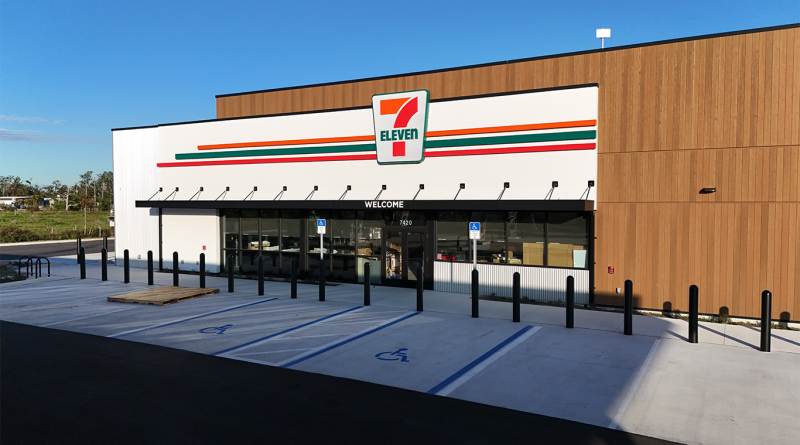
The lawsuit, filed in federal court in Dallas, alleges that Nike’s latest sneaker features a tri-color stripe design that closely resembles the orange, green and red motif that has long been associated with 7-Eleven stores across the United States and internationally. According to the complaint, the similarity is so striking that consumers could mistakenly believe the footwear has been created in partnership with the retailer or has received its endorsement.
The dispute has attracted widespread attention because it centres on a simple combination of colours rather than a logo or name. It also highlights the increasing value of distinctive brand identities and how companies are prepared to defend visual elements that have become synonymous with their businesses.
With the shoe scheduled to launch on July 11, the date celebrated annually as 7-Eleven Day and the company’s famous Free Slurpee Day, the retailer argues that the timing only strengthens the perceived connection between the sneaker and its brand.
7-Eleven alleges deliberate imitation
At the heart of the case is 7-Eleven’s claim that Nike intentionally designed the new Air Max 95 to evoke its established visual identity.
The convenience store chain says it has spent decades building recognition around its signature orange, green and red stripe pattern, which appears across storefront signage, marketing campaigns, promotional products, employee uniforms and branded merchandise. The company also states that it owns multiple trademark registrations covering elements of its distinctive branding.
According to court documents, 7-Eleven believes the colour arrangement on the upcoming Air Max 95 goes beyond simple inspiration. Instead, it argues that Nike has created a confusingly similar design that could lead shoppers to assume an official collaboration exists.
Trademark law is intended to prevent precisely this type of confusion. While colours themselves cannot always be protected, combinations of colours that have acquired distinctiveness through long-term commercial use may qualify for trademark protection if consumers associate them with a particular company.
7-Eleven claims its tri-color stripe has achieved that level of recognition. As a result, it argues that Nike’s design risks diluting the value of its brand while allowing the footwear company to benefit from years of investment in establishing consumer recognition.
The retailer also alleges that Nike’s decision to launch the product on July 11 was not coincidental. Because the date is closely linked to 7-Eleven’s annual customer celebration, the company says the release schedule further reinforces an implied connection between the two brands.
The complaint characterises Nike’s actions as showing a “callous and malicious disregard” for 7-Eleven’s intellectual property rights. Those allegations are likely to become a central point of contention if the case proceeds through the courts.
Attempts to avoid legal action
According to the lawsuit, litigation was not 7-Eleven’s preferred outcome.
The retailer says it made several attempts to resolve the issue privately before filing its complaint. Representatives reportedly contacted Nike to express concerns over the sneaker’s appearance and sought an agreement that would avoid legal proceedings.
However, 7-Eleven claims those discussions failed to produce a satisfactory resolution.
The lawsuit alleges that Nike remained committed to launching the shoe and continued marketing the product despite being informed of the retailer’s objections. Faced with what it viewed as an imminent infringement of its trademark rights, 7-Eleven says it had little choice but to seek judicial intervention.
The timing added further urgency to the dispute. With the scheduled release only days away, the retailer argues that immediate action became necessary to prevent potential consumer confusion and protect the integrity of its brand.
Nike has yet to publicly respond in detail to the allegations or file a formal defence in court. As with many intellectual property disputes, the company will have an opportunity to contest the claims and argue that the design does not infringe upon any valid trademarks.
The outcome may ultimately depend on whether the court believes ordinary consumers would genuinely associate the sneaker with 7-Eleven or view the colour scheme simply as a decorative design.
What 7-Eleven wants from the court
The retailer is seeking a broad range of legal remedies if it succeeds in its case.
First, 7-Eleven wants the court to block Nike from selling the disputed version of the Air Max 95 altogether. Such an injunction would prevent further distribution of the shoe while the trademark issues are resolved.
The company is also requesting that Nike recall any products that have already entered the supply chain. Product recalls are relatively uncommon in trademark disputes but can be ordered if a court determines that infringing products should be removed from the market.
In addition to stopping sales, 7-Eleven is seeking financial compensation for any damage caused to its brand. The retailer argues that Nike has unfairly benefited from associations with its distinctive identity and should therefore surrender any profits generated through sales of the disputed footwear.
If the court concludes that the infringement was deliberate, additional damages may also become available under trademark law, although such awards depend on the specific findings made during the case.
The legal dispute demonstrates how valuable visual branding has become in today’s competitive consumer marketplace. Companies increasingly view colours, packaging and design elements as significant commercial assets that deserve the same level of protection as names and logos.
Over the past decade, courts have seen a growing number of trademark disputes involving colour combinations and distinctive product appearances. Brands across industries have sought to establish exclusive rights over design features that consumers immediately recognise.
Whether 7-Eleven can successfully claim exclusive rights over its familiar stripe pattern will depend on the strength of its trademarks and its ability to demonstrate that consumers genuinely associate the colour arrangement with the retailer.
For Nike, the case represents another example of how product design can become the subject of high-profile intellectual property litigation. The company has both pursued and defended numerous trademark cases involving footwear designs, logos and distinctive visual features over the years.
As the legal proceedings move forward, the court will need to determine whether the similarities between the Air Max 95 and 7-Eleven’s branding are sufficient to create consumer confusion or whether the design falls within the bounds of lawful creative expression.
The decision could have implications beyond the two companies involved. It may provide further guidance on how courts assess trademark protection for colour combinations and whether established brands can successfully prevent competitors from using similar visual themes.
For now, the case serves as another reminder that branding extends far beyond company names and logos. Colours, patterns and overall visual identity can become powerful commercial assets, and businesses are increasingly willing to defend them through the courts when they believe those assets are under threat.
With the planned July 11 launch attracting significant attention, the dispute has already generated widespread interest among both sneaker enthusiasts and intellectual property specialists. Whether the contested Air Max 95 ultimately reaches consumers unchanged may now depend on how quickly the court responds to 7-Eleven’s request for legal intervention.
Source