
For Rachel Delacour of Sweep, sustainability is more than just a trend, it is simply smart business
As various countries around the world deal with the effects of the latest El Niño, Rachel Delacour, CEO and Co-Founder of Sweep, shares her expertise on how extreme weather events like this one impact retailers and supply chains, and how her company works to help mitigate them.
“Sweep is a software vendor and sustainability data intelligence platform that helps large companies turn their sustainability data into measurable business performance. That includes analytics, data collection and monitoring, empowering companies to make sense of their data in order to make better decisions. Our operations are closely linked to my background in finance. I studied finance and started my first company, BIME Analytics, 15 years ago; a cloud analytics SaaS offering business intelligence and analytics for business data. That company was later acquired by Zendesk. Sweep applies a similar philosophy, but to non-financial data, helping to ease the decision-making process around sustainability,” she begins.
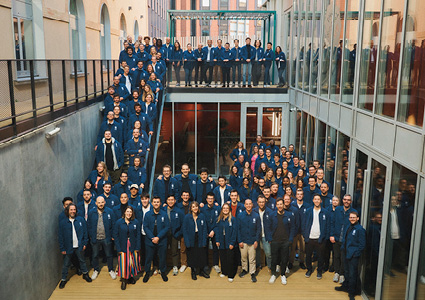
Founded in 2020, Sweep now employs almost 200 people across France, the UK and the US. The company has grown steadily since its inception, expanding its customer base year on year across European, British and American markets. Recently, the US became Sweep’s leading region for new revenue, as American companies have increasingly come to understand the benefits of analyzing their sustainability data.
“Through our software, we help companies turn complex sustainability data into measurable business value,” Rachel elaborates. “We understood very early on that businesses had set ambitious climate commitments but lacked the tools and data infrastructure needed to actually deliver on those targets. Measuring sustainability is difficult because most of the time, the key information is scattered across spreadsheets, silos, systems and suppliers, particularly when it comes to carbon emissions across Scope 1, 2 and 3. We are talking about information that often sits outside a company’s core systems, yet that company is still accountable for reporting on it from a methodological standpoint. Collecting, monitoring, analyzing and disclosing all of that data from a single place is difficult for most businesses to do alone. That is exactly what Sweep does: we use digital technology to connect those dots, no matter how varied the data sources are, to bring everything into one place for analytics purposes. We mask that complexity, and the scale that digital tools provide allows any company to connect with suppliers right across their global supply chain, from Greenland to India to South Africa, in order to drive meaningful action.”
A global impact
Global supply chain visibility has become increasingly important as climate disruption begins to feed directly into pricing decisions across the retail industry. “Climate challenges are a direct business issue, because margins across these industries are already pretty thin. We have worked with large retailers in the food industry since 2020, and we have seen firsthand how they have been able to act on cost, protect their supply chains and build resilience through the set of regulatory frameworks they have had to navigate. For example, the CSRD framework requires companies to look at their impact, risks and opportunities in detail. Almost overnight, companies had to start gathering that data and organizing their response to it. After around six years of working with that supply chain data, many of them have managed to find high levels of resilience and profitability as a result.
“This is because the more visible ESG and carbon data becomes, the better a company understands where the energy costs within its supply chain are coming from, and the better prepared it can be for potential disruption, whether that means making smarter choices around food sourcing or elsewhere. Being less affected by disruption ultimately leads to more margins at the end of the day. Over time, if retailers are not acting on this themselves, those costs get passed on to the consumer. It sounds simple, but it really is a chain of consequences; if businesses are not building more flexibility into their value chain or finding better ways to support their suppliers through incentives, they remain far more exposed. The clearer the visibility a company has over the carbon being produced across its supply chain, the less vulnerable it becomes to extreme weather,” Rachel informs.
That vulnerability is becoming increasingly difficult to ignore. Climate volatility, from El Nio to extreme weather events more broadly, is disrupting global sourcing, production and supply chains across most industries, and retail is no exception. Extreme weather can impact productivity and working conditions, and in some cases forces companies to shut down parts of their operations entirely. Transportation is also affected, as energy prices become increasingly tied to carbon border pricing, with regulations changing at varying speeds across different regions. Companies that do not understand or acknowledge that shift face a much steeper carbon cost at the border that will directly affect margins, the bottom line and how a business is able to supply itself. Passively waiting for calmer conditions, without preparing and building resilience in the meantime, simply is not a viable strategy.
“Climate events have accelerated significantly in recent years, with more frequent heatwaves and floods,” Rachel points out. “As a result, retailers have quickly come to realize that climate change is not a long-term problem anymore; it is a mid-term or even short-term challenge they have to address right now. Without the technology and data to support that decision-making process, businesses are left working with information that is unclear at best. It is simply not viable to operate blind when it comes to non-financial data, in the same way you would never operate blind with financial data.”
Connecting the dots

There are several ways retailers can mitigate financial losses across their supply chains caused by extreme weather, as Rachel explains. “First, they need accurate data on a frequent basis, so they can organize and articulate a decision-making process quickly, which is exactly where Sweep can help. At a broader level, retailers need to understand their full supplier chain, from tier one right through to tier four. The sooner a business can see where disruption might occur, the sooner it can put alternative routes or options in place to keep supply at the level needed to protect its own revenue. We are already seeing some of our larger retail clients put incentives in place for their supply chains, because the starting point is always having an accurate, real-time picture of what is happening. If there is a risk identified with a particular supplier, but that supplier is committed to improving and reducing its own exposure to disruption, large retail clients can actually help scale climate solutions for that supplier directly. It is always a matter of connecting information and connecting the dots. When you bring the sustainability team, the CFO’s office and risk management together within a business, it becomes incredibly powerful in terms of improving supplier health over the next five years. Supply chain risk has always been discussed during periods of disruption, but it has accelerated considerably because regulatory frameworks now require that data to be collected formally. The fact that the data is auditable makes it carry real weight in the boardroom. Regulatory frameworks have made auditable data the legitimate foundation for those conversations,” Rachel elaborates.
The role of technology
Underpinning all of this is the critical role technology plays in mapping environmental and supply chain exposure across a vast and varied supplier base. Before founding Sweep, Rachel read her first IPCC report and recognized the scale of the threat clearly: the risks were real and accelerating, and while solutions existed, there was no clear way to connect them to the problem at hand. With 15 years of experience in digital, cloud and SaaS software behind her, solving that challenge through new technology was something that Rachel could confidently take on.
“Alongside my co-founders, we set out to connect those dots, at the very least to help companies understand the full perimeter of their challenge, so they could make better decisions about which solutions to choose. Technology is fundamentally about giving visibility to data points, bringing in historical data so a company can see whether it is progressing and in which direction it is heading. For instance, when acquiring a new company, businesses now look closely at ESG exposure, and technology should already have that ESG data organized and ready. Increasingly, it is also about protecting the value of an investment, because a significant part of that value resides within the ESG data itself. A company with strong revenue today but real exposure elsewhere in its ESG profile may simply not be worth the same in five years’ time.
“Technology gives businesses a sense of what still needs correcting and what that correction might cost. In the same way the financial world built out a financial technology stack over time, retailers are now building an ESG and carbon technology stack that allows them to audit their own performance honestly, whether they like the results they find or not. The most important thing is understanding your baseline through technology, and understanding the trajectory you are defining from that point forward. Technology helps companies build those assumptions and test them against reality, in exactly the same way they would when budgeting revenue or planning procurement,” Rachel concludes.