How retailers can navigate the next phase of tariffs and supply chain volatility. By Steve Peppler
The retail industry has long been defined by its ability to stay one step ahead of the next consumer trend. But as we closed the first quarter of 2026 – shaped by geopolitical upheaval, accelerating trade policy shifts, and consumers under mounting financial pressure – protecting margins has never been more difficult or more urgent.
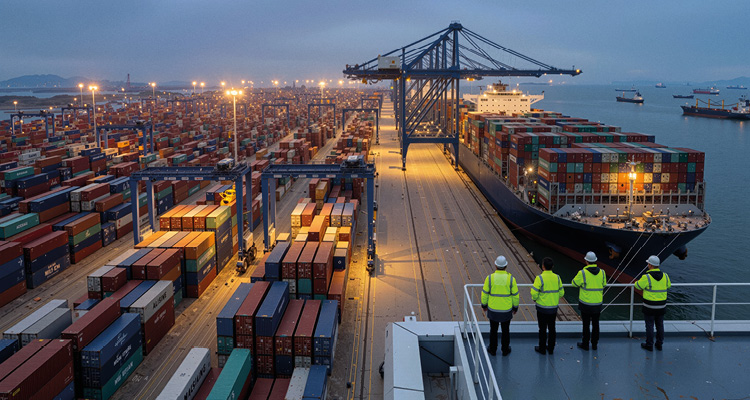
The scale of US retail’s dependence on global supply chains is striking. Only one percent of toys, three per-cent of fashion, and ten percent of personal care products are manufactured domestically, meaning the overwhelming majority of shelf inventory originates abroad. That exposure comes at a price: over the course of 2025, the average US tariff rate on imports surged from just 2.6 percent at the start of the year to 13 percent by year-end – a fivefold increase that is still reverberating through supply chains today.

The cost burden has fallen squarely on US businesses and their customers. But as the Federal Reserve noted in its March 2026 analysis, pre-tariff inventory buffers are now being exhausted, and the era of cost absorption is ending. Retailers must find a way to protect profitability while remaining attuned to the financial pressures currently reshaping consumer behavior.
Adopting sophisticated pricing strategies
One common reaction to a rising tariff environment is to implement blanket price increases across a product range. While administratively simple, this approach carries real risk in the current market. Four in five US consumers (79 percent) report already changing their purchasing behavior in response to tariff-driven price increases, according to a 2026 Upside survey.
Leading retailers are building strategies around price elasticity – identifying where pricing power exists and where it does not. According to Bain & Company, firms with agile pricing mechanisms outperformed stat-ic-pricing competitors by more than 15 percent in high-volatility markets. McKinsey research has found that companies embedding algorithmic pricing into their workflows see revenue lifts of three to eight per-cent and margin improvements of up to 20 percent.
Rather than across-the-board increases, retailers can use sophisticated pricing tools to identify pockets of pricing power – regions where consumer confidence remains stronger, product lines with lower elasticity, or channels where brand loyalty provides a buffer – while staying sharply competitive where the risk of losing customers is highest. This granular, data-driven approach is what separates margin protection from margin erosion in a tariff-pressured environment.
Building resilience
Strategic resilience comes from building a pricing and planning ecosystem capable of responding to these shifts in near real time. That requires moving away from manual pricing processes – spreadsheets, static price lists, legacy ERP capabilities – toward tools that can model different tariff scenarios and test the im-pact of pricing changes before they erode margin.
The recent Supreme Court rulings on tariff authority have done little to restore a sense of predictability. Trade policy is shifting overnight, and there is no clarity on what comes next.
The IMF has warned that tariffs may escalate further, and that a renewed round of trade tensions could lower global output by an additional 0.3 percent. Against that backdrop, waiting for stability before investing in pricing infrastructure is a strategy that guarantees being perpetually behind.
For most retailers, investing in pricing technology and implementing data-driven strategies offers the most immediate, cost-effective, and impactful response available. Research from 42Signals found that retailers with robust pricing intelligence achieve three to eight percent revenue uplift, one to four percent margin improvement, and 22 percent faster competitive response times compared to peers.
Simon-Kucher’s 2025 Global Pricing Study found that 86 percent of companies reported revenue growth last year, with 80 percent having passed cost increases on to customers – and in 55 percent of cases, list price increases met or exceeded rising input costs. The companies achieving those results are not simply reacting to tariffs; they are managing them proactively, with the data infrastructure and systems to make calibrated pricing decisions at speed.
Those who invest in true pricing agility now can build the resilience to navigate future trade shifts with confidence. The retail industry is renowned for its ability to reinvent the customer experience. Now, that same spirit of innovation must be applied to the back office – and to the pricing decisions that determine whether innovation translates into lasting profitability.
For the list of sources used in this piece, please contact the editor.
Steve Peppler
Steve Peppler works at Enable. In an era of sustained volatility, markets move faster, and commercial relationships are more complex than ever. Enable helps organizations manage pricing and rebates with clarity, control and confidence, giving them the commercial intelligence they need to perform in dynamic, high-pressure environments.