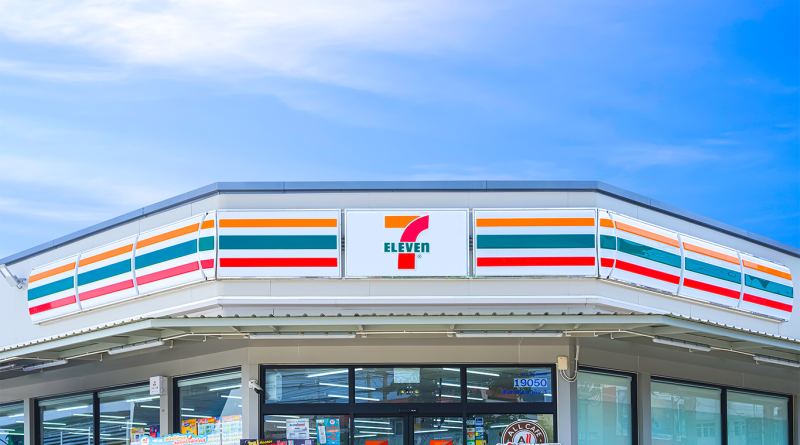
Inside 7-Eleven’s 645 store closures and what it signals for US retail
7-Eleven’s decision to close 645 stores across the United States marks one of the most significant pullbacks in the convenience retail sector in recent years. Long seen as a near-ubiquitous presence in urban and suburban environments, the chain’s scale has been central to its competitive advantage. The planned closures signal a recalibration rather than a retreat, as the company seeks to align its footprint with shifting economic realities.
The move comes at a time when retail closures have become a recurring feature of the US commercial landscape. While department stores and apparel chains have dominated headlines in recent years, convenience stores have largely avoided similar scrutiny. That is beginning to change. Rising costs, evolving consumer behaviour and intensifying competition are now reshaping even the most resilient segments of physical retail.
For 7-Eleven, which operates thousands of locations nationwide, the closures represent a relatively small percentage of its overall network. Yet the symbolic weight is considerable. Convenience retail has long relied on proximity and density. The assumption has been that more locations translate into more frequent purchases. That model is now under pressure as consumers rethink spending habits and alternatives multiply.
The announcement underscores a broader shift in how scale is being evaluated. Instead of prioritising store count, operators are increasingly focused on store productivity. In that context, closing underperforming locations becomes less a sign of weakness and more a reflection of strategic discipline.
Why 7-Eleven is closing stores
At the core of the closures is performance. Like many franchise-heavy operators, 7-Eleven relies on individual store economics that can vary widely depending on location, demographics and operating costs. Stores that once generated steady foot traffic may now struggle to maintain profitability in a more challenging environment.
Consumer behaviour has shifted in subtle but meaningful ways. Inflation has reshaped purchasing decisions, particularly in categories that define convenience retail such as snacks, beverages and tobacco. These are often impulse purchases, and when consumers cut back, convenience stores feel the impact quickly. The cumulative effect is a decline in basket size and visit frequency.
At the same time, operating costs have continued to rise. Labour remains a persistent challenge, with wage pressures affecting margins across the sector. Rent and utilities have also increased, particularly in urban locations where many convenience stores are concentrated. Supply chain disruptions, while less acute than in previous years, have left a lasting imprint on cost structures.
Franchise dynamics add another layer of complexity. Individual operators must balance corporate expectations with local realities. In some cases, stores may no longer justify continued operation from a franchisee perspective, even if they contribute marginally to overall network presence. Closing such locations allows both the company and its partners to redeploy resources more effectively.
The result is a convergence of pressures that make rationalisation unavoidable. Rather than sustaining a long tail of underperforming outlets, 7-Eleven is opting to streamline its network.
The broader retail context
7-Eleven’s decision does not exist in isolation. Across the US retail sector, companies are reassessing their physical footprints. The past decade has seen a gradual shift toward fewer, more efficient stores supported by digital capabilities. That trend has accelerated in the wake of economic uncertainty.
Convenience stores face a distinct competitive landscape. Supermarkets and big-box retailers have expanded their ready-to-eat and grab-and-go offerings, encroaching on traditional convenience territory. Dollar stores have also gained ground by offering low-priced essentials in accessible locations. Meanwhile, delivery platforms have introduced a new form of convenience, allowing consumers to bypass physical stores altogether.
Geography plays a critical role. Urban stores, once prized for high foot traffic, have been affected by changes in commuting patterns and office occupancy. Suburban locations have proven more resilient in some cases, but they are not immune to broader spending constraints. The uneven recovery across regions has made it harder to sustain a uniform network strategy.
Retailers are responding by concentrating on locations with clear competitive advantages. This may include proximity to transport hubs, strong local demand or favourable cost structures. The emphasis is shifting from ubiquity to relevance. In that sense, closures are part of a broader industry effort to recalibrate for a more selective consumer environment.
Strategy shift at Seven & i Holdings
The closures also reflect evolving priorities at Seven & i Holdings, the Japanese parent company of 7-Eleven. In recent years, the group has signalled a greater focus on profitability and capital efficiency. This has included divestments, restructuring efforts and a renewed emphasis on core operations.
For 7-Eleven, that translates into a more disciplined approach to expansion and maintenance of its store base. Rather than pursuing growth for its own sake, the company is prioritising returns on investment. Closing underperforming stores frees up capital that can be directed toward higher-yield opportunities.
One area of focus is the evolution of the store format. Convenience retail is increasingly defined by differentiation, particularly in food and beverage offerings. Fresh food, private label products and premium items are seen as avenues for margin expansion. Investing in these categories requires capital, which in turn necessitates trade-offs elsewhere in the network.
Technology is another component of the strategy. From digital payment systems to data-driven inventory management, operators are seeking efficiencies that can enhance profitability at the store level. These investments are more effective when concentrated in a streamlined network rather than dispersed across marginal locations.
The broader objective is to reposition 7-Eleven for a more competitive and less forgiving retail environment. That involves difficult decisions, including store closures, but also creates the conditions for longer-term stability.
What it means for the future of convenience stores
The implications of 7-Eleven’s move extend beyond the company itself. The convenience store sector is entering a phase of consolidation and transformation. Operators that can adapt to changing consumer expectations and cost realities are likely to emerge stronger, while others may struggle to maintain relevance.
One defining feature of the next phase will be the redefinition of convenience. Physical proximity will remain important, but it will no longer be sufficient. Consumers are increasingly looking for value, quality and speed in combination. Stores that can deliver on all three dimensions will have a competitive edge.
For suppliers, the shift may result in a more concentrated distribution landscape. Fewer stores with higher throughput could change ordering patterns and product mix. Franchisees, meanwhile, will need to navigate a more performance-driven environment where marginal locations are less likely to be sustained.
Consumers may notice subtle changes rather than dramatic ones. While some locations will disappear, others will evolve to offer a broader and more curated selection. The overall experience is likely to become more differentiated, reflecting the need to stand out in a crowded marketplace.
7-Eleven’s decision to close 645 stores is ultimately a reflection of a sector in transition. Convenience retail is not disappearing, but it is being reshaped by economic pressures and competitive forces. The companies that recognise this shift and act decisively are positioning themselves for a future where efficiency and relevance matter more than sheer scale.
Source: