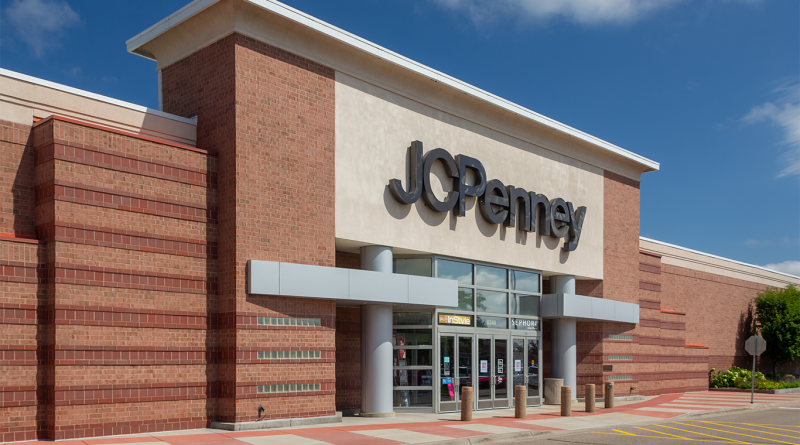
JCPenney Takes Aim at Off-Price Retail as Shoppers Rethink the Meaning of Value
JCPenney would like American consumers to believe that bargain hunting has become bad for their health.
That, at least, is the conceit behind the retailer’s latest marketing campaign. The JCPenney Retail Rejuvenation campaign sends six off-price shoppers to a mock wellness retreat, where trust falls, mantras and primal screams are deployed to help them confront their questionable shopping decisions.
Created with agency Mischief, the four-minute film plays like a parody of both wellness culture and the peculiar rituals of bargain shopping. Consumers are encouraged to reject products that are stained, incorrectly sized or otherwise compromised. In one particularly pointed comparison, a Dolce & Gabbana fragrance from JCPenney is positioned against an old bag of fall potpourri.
The joke masks a more serious commercial proposition.
JCPenney is trying to convince price-sensitive Americans that there is a difference between paying less and receiving value. In doing so, the department store is taking aim at a shopping model that has helped redraw American retail over the past two decades.
The timing is deliberate. Preliminary University of Michigan data showed consumer sentiment falling 7.6 percent in August from July and 12.4 percent from a year earlier. Only 8 percent of consumers expected their income growth to outpace inflation over the following year. High prices, in other words, remain firmly lodged in the consumer psyche.
For retailers, that makes value one of the most valuable commodities in the market.
JCPenney turns retail regret into a marketing strategy
JCPenney’s campaign does not explicitly tell consumers to stop looking for deals. It instead challenges what they should be prepared to tolerate to obtain one.
“Most Americans are motivated to shop for deals [but] sometimes deals aren’t all they’re cracked up to be,” Marisa Thalberg, chief customer and marketing officer at JCPenney parent Catalyst Brands, told Marketing Dive.
That distinction is important.
Off-price retail has turned unpredictability into part of the attraction. Shoppers enter stores without necessarily knowing what brands, sizes or products they will find. The possibility of discovering something unexpectedly desirable at an unexpectedly low price becomes part of the experience.
JCPenney is attempting to invert that proposition. Its Retail Rejuvenation Retreat presents unpredictability not as treasure hunting but as potential retail regret.
The creative work is being supported by a promotion designed to turn that argument into store traffic. From Aug. 28 to Aug. 30, shoppers can bring a “retail regret” to JCPenney and receive $15 off a purchase of $50 or more. Items collected through the promotion are to be donated through Good360.
It is a familiar mechanism for the retailer. JCPenney has experimented with trade-ins and unconventional promotions before, including a Valentine’s Day jewelry initiative and a July Fourth offer that converted gas receipts into $10 discounts.
The strategy gives the advertising a function beyond generating attention. A joke about a disappointing purchase becomes a physical object that can be carried into a JCPenney store and converted into another purchase.
The campaign also extends the “Yes, JCPenney” platform introduced in 2025, which has sought to challenge assumptions about a retailer whose long history can be both an asset and a burden.
The fight to redefine value
The broader battle is taking place against an unforgiving economic backdrop.
University of Michigan researchers said August’s decline in sentiment was particularly pronounced among older and lower-income consumers and people without college degrees, groups that can be especially exposed to declining purchasing power. Year-ahead inflation expectations also edged higher in August.
The pressure is changing how consumers shop.
For JCPenney, competing solely on price would be a difficult proposition. Its alternative is to broaden the definition of value so that price is only one component, alongside product quality, recognizable brands, choice and the confidence that a shopper will actually find something suitable.
That idea is visible elsewhere in the retailer’s marketing. During the back-to-school season, JCPenney introduced a Price Lock guarantee on selected merchandise through Aug. 27, promoted with comedian Zarna Garg. Rather than promising the lowest imaginable price, the proposition addresses another consumer anxiety: the possibility that waiting to buy could make an item more expensive.
The two campaigns approach the same problem from different directions. Price Lock seeks to reduce uncertainty about when to buy. Retail Rejuvenation seeks to reduce uncertainty about what a bargain is worth.
This makes the wellness parody more than a creative flourish. JCPenney is effectively trying to establish reliability as a premium within value retail.
There is also a calculated advantage in attacking a behavior rather than a named competitor. The company can satirize the frustrations associated with off-price shopping without entering a direct advertising confrontation with a particular chain. Consumers are left to supply their own memories of clothes that almost fitted, products that were nearly perfect or bargains that turned out not to be bargains at all.
Humor meets the economics of a turnaround
The risk is that advertising can change perceptions faster than a retailer can change its underlying business.
JCPenney’s first-quarter results underline the scale of the challenge. Net sales fell 4.6 percent year over year to $1.25 billion, according to Retail Dive’s reporting on company filings. Gross margin contracted by about 20 basis points amid tariff costs, shifts in category mix and heavier promotional activity.
There were brighter spots. Activewear, jewelry and home performed well, while selling, general and administrative expenses declined. The retailer also said synergies associated with Catalyst Brands were running ahead of schedule and that it had no outstanding long-term debt.
Catalyst Brands gives JCPenney a broader corporate platform from which to attempt its repositioning. Formed through the combination of JCPenney and SPARC Group in 2025, the organization brought together a portfolio that includes brands such as Aéropostale, Brooks Brothers, Lucky Brand and Nautica.
Yet JCPenney’s marketing problem is unusually complicated because longevity cuts both ways.
The retailer will turn 125 in 2027. That history gives it extraordinary familiarity in the American market, but familiarity can harden into assumptions about who a retailer is for and what a visit to its stores will deliver.
Thalberg has described JCPenney as an underdog that needs consumers beyond its established customer base to see it with “fresh eyes.”
That may explain why Retail Rejuvenation is so willing to make fun of retail conventions. A heritage department store cannot behave like an insurgent simply by declaring itself one. It has to create some friction with the category around it.
JCPenney’s wager is that a period of intense price sensitivity creates an opening. Consumers still want bargains, but they may increasingly ask what they are sacrificing to obtain them.
The retreat, the primal screams and the potpourri can get people laughing about that question. The harder task begins when those consumers walk through JCPenney’s doors.
Then the retailer has to prove that the joke contains some truth.