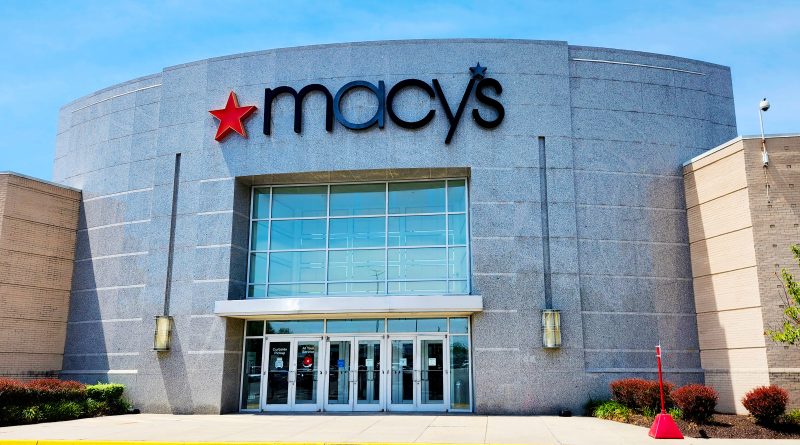
Macy’s closures signal a deeper shift in American retail
Subscribe to our free newsletter today to keep up to date with the latest retail news.
Macy’s plans to close another 14 stores in 2026, extending a restructuring strategy that reflects pressure across the US department store sector. The move is part of the retailer’s broader “Bold New Chapter” initiative, which aims to eliminate about 150 underperforming locations while concentrating investment in stronger stores, ecommerce operations and luxury-focused growth segments.
For decades, department stores relied on scale, mall traffic and national expansion to drive growth. That model is under pressure from online retail, changing consumer spending habits and the financial realities of operating large physical footprints in aging shopping centers.
The latest closures are not simply another round of retrenchment. They point to a wider recalibration across American retail, where fewer stores increasingly matter more than larger networks.
Macy’s is shrinking its footprint to protect profitability
The latest closures follow dozens of Macy’s shutdowns announced during 2025. Company executives have framed the strategy as a long-term effort to improve profitability, not merely a short-term response to weaker sales.
Macy’s has focused on directing resources toward higher-performing locations, modernized store formats and digital commerce. Early results from the company’s upgraded “Reimagine 125” locations suggest the strategy may be gaining traction. Some remodeled stores have reported comparable sales growth in recent quarters, supporting management’s argument that productivity matters more than total store count.
That approach reflects a broader reality across retail. Large chains no longer view physical expansion as the clearest marker of success. Investors increasingly favor retailers that can generate stronger margins from smaller, more efficient networks.
The economics behind department stores have become more difficult over the past decade. Mall traffic has weakened in many regions, particularly at mid-tier shopping centers that once relied heavily on anchor tenants such as Macy’s, JCPenney and Sears. Rising labor costs, higher insurance expenses and more demanding fulfillment expectations have reshaped operational priorities.
Department stores sit in a difficult position within the retail market. Discount retailers continue attracting cost-conscious consumers, while luxury brands have benefited from wealthier shoppers who remain willing to spend. Traditional middle-market department stores often struggle to define their role between those two poles.
Macy’s response has been to narrow its focus rather than pursue another broad expansion cycle. The company continues investing in Bloomingdale’s and Bluemercury, both of which operate in categories with stronger long-term growth potential than traditional mall-based apparel retail.
The closures also show how public retail companies now prioritize shareholder discipline. Maintaining underperforming locations for the sake of national presence has become harder to justify in a market focused on operational efficiency and measurable returns.
Department stores are no longer built around endless expansion
For much of the late 20th century, department stores expanded alongside suburban malls. New housing developments often meant new retail corridors, with anchor tenants serving as the centerpiece of regional shopping centers.
That environment has changed sharply.
Consumers now move between online shopping, mobile browsing and physical retail visits. Convenience, fulfillment speed and pricing transparency have reduced the advantage once held by large department store operators with national footprints.
Retailers are also reassessing the purpose of physical stores. Many chains now view stores as fulfillment hubs, brand showrooms or customer service centers rather than purely transactional spaces.
This transition helps explain why store closures no longer necessarily signal collapse. Some retailers are shrinking legacy locations while opening smaller or more specialized formats elsewhere.
Several retail categories remain healthy. Off-price chains, warehouse clubs and discount retailers continue expanding in many markets. Luxury retail has also proven more resilient than much of the middle market, particularly in affluent urban areas and destination shopping districts.
The challenge for department stores lies in adapting legacy infrastructure built for a previous era of consumer behavior. Large multi-floor locations designed around high foot traffic are expensive to operate when shopping habits become more fragmented.
Mall operators face similar pressure. The loss of anchor tenants often reduces traffic for smaller retailers nearby, which can accelerate decline within weaker shopping centers. Stronger malls with luxury tenants, entertainment offerings and mixed-use developments have generally performed better than older regional malls dependent on traditional department stores.
Macy’s closures reflect both company-specific restructuring and broader economic shifts affecting commercial real estate, consumer behavior and retail investment strategies.
Physical retail is changing rather than disappearing
Despite years of predictions about the death of brick-and-mortar retail, physical stores still play a central role in consumer spending. The difference is that retailers are becoming far more selective about what kinds of stores they operate and where they place them.
Successful physical retail increasingly depends on experience, convenience and brand differentiation. Stores must justify their operating costs by serving multiple functions within broader omnichannel strategies.
Retailers that survived recent industry disruption often did so by reducing excess inventory, improving digital integration and refining customer targeting rather than chasing maximum geographic coverage.
Macy’s appears to be following that logic. The company’s strategy suggests executives believe long-term stability will come from operating a smaller but stronger network capable of producing more consistent returns.
That shift mirrors trends visible throughout corporate America, where scale alone no longer guarantees resilience. Efficiency, adaptability and customer retention increasingly matter more than sheer footprint.
The department store sector still faces difficult structural challenges. Younger consumers shop differently than previous generations, malls continue losing relevance in some markets and ecommerce expectations continue rising. Yet physical retail remains deeply embedded within American consumer culture.
The question is no longer whether stores will survive. It is which formats, locations and strategies can remain profitable in a retail environment defined by flexibility rather than permanence.
Macy’s latest closures may appear incremental on their own. Together, they represent another step in the long restructuring of American retail, where survival increasingly depends on precision rather than scale.
Source