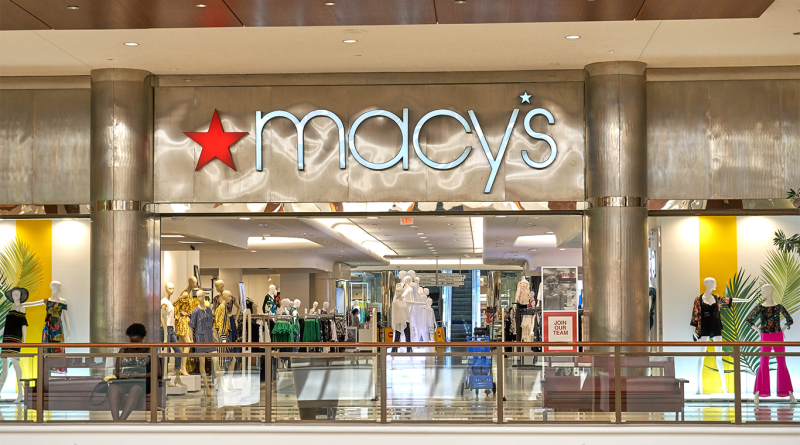
Macy’s store closures accelerate as retailer bBets on smaller footprint
The clock is ticking for shoppers at a Macy’s store in Tarentum, Pennsylvania. After more than two decades in operation, the Pittsburgh Mills Mall location is set to close on April 26, marking one of 14 stores the retailer plans to shut in the first half of 2026.
For customers, the final days look familiar. Clearance racks are picked over, signage announces steep discounts and returns are no longer accepted. For Macy’s, however, the closure represents something far more deliberate. It is another step in a multi year restructuring effort that is reshaping one of America’s most recognisable retail brands.
The Tarentum store is not an isolated case. Locations across California, New Jersey, New York and other states are also set to close, all part of a plan first outlined in 2024 to shutter roughly 150 underperforming stores by the end of 2026.
What is unfolding is not simply a wave of closures. It is a calculated retreat.
A retailer shrinking to grow
Macy’s leadership has framed the closures as a necessary correction rather than a sign of decline. Under its “Bold New Chapter” strategy, the company is reducing its physical footprint while redirecting investment into higher performing locations, digital capabilities and luxury segments such as Bloomingdale’s and Bluemercury.
The logic is straightforward. Not all stores contribute equally to revenue or profitability. By eliminating weaker locations, Macy’s aims to concentrate resources on a smaller network of stores that generate stronger returns.
Early indicators suggest some traction. The company has reported modest growth in comparable sales and improved performance in its upgraded “Reimagine” locations, which focus on enhanced layouts, curated product ranges and improved customer experience.
At the same time, the retailer is leaning into digital commerce. Online shopping, once a supplementary channel, is now central to how Macy’s engages customers. Investments in logistics, fulfilment and personalisation are intended to bridge the gap between physical and digital retail.
The long term ambition is clear. Macy’s is aiming to operate a smaller but more productive store base, with around 350 core locations compared with more than 800 at its peak.
The wider retail reset
Macy’s is far from alone. Across the United States, store closures have become a defining feature of the retail landscape. Thousands of locations are expected to shut in 2026 alone, spanning sectors from apparel to food service.
This trend reflects a deeper structural shift. Traditional brick and mortar retail is under pressure from several directions at once. E-commerce continues to capture a growing share of consumer spending. Discount chains and fast fashion brands are competing aggressively on price and speed. Meanwhile, operating costs including rent and labour remain elevated.
The result is a market where scale alone is no longer a guarantee of success. Retailers are increasingly prioritising efficiency over expansion.
For department stores in particular, the challenge is acute. Once the anchor tenants that drove foot traffic to shopping malls, they now face declining relevance as consumer habits evolve. Shoppers are more likely to browse online, visit niche retailers or seek out experiential shopping environments that combine retail with entertainment and dining.
Industry analysts often describe the current phase as a rationalisation rather than a collapse. Closing stores, in this context, is a strategic move to eliminate inefficiencies and adapt to new patterns of demand.
The impact on malls and communities
The closure of a Macy’s store carries consequences beyond the company itself. Department stores have historically played a central role in the ecosystem of shopping malls. Their presence attracts smaller retailers, supports foot traffic and contributes to the overall viability of a location.
When an anchor tenant leaves, the effects can ripple outward. Reduced footfall can lead to declining sales for neighbouring stores, which in turn increases vacancy rates. Over time, entire malls may struggle to remain viable.
In some cases, redevelopment offers a path forward. Former department store spaces are being repurposed into residential units, entertainment venues or mixed use developments. This reflects a broader shift in how physical retail space is used, with an emphasis on experiences rather than purely transactional shopping.
For employees, however, the transition is more immediate. Store closures often mean job losses or relocations, adding a human dimension to what might otherwise be viewed as a strategic business decision.
Customers, meanwhile, face a different adjustment. The convenience of a nearby department store is replaced by longer travel distances or a greater reliance on online shopping. While digital channels offer convenience, they do not fully replicate the tactile experience of in store browsing.
A turning point for department stores
Macy’s current strategy raises a broader question about the future of department stores. Can the format evolve to remain relevant, or is it gradually being phased out?
The answer likely lies somewhere in between. While the traditional model of large, all encompassing stores is under pressure, there is still demand for curated retail experiences. Macy’s is betting that a more focused approach, combining physical stores with strong digital integration, can sustain its business.
There are signs that this approach can work. Growth in luxury segments and improved performance in redesigned stores suggest that consumers are still willing to engage with the brand under the right conditions.
At the same time, the risks remain significant. The transition requires careful execution, sustained investment and a clear understanding of changing consumer preferences. Missteps could undermine the gains achieved through store closures.
What is clear is that the era of expansive department store networks is coming to an end. The future will likely be defined by fewer locations, each designed to deliver a more targeted and engaging experience.
As the Tarentum store prepares to close its doors, it serves as a visible marker of that transition. For Macy’s, the challenge is not just to shrink, but to redefine what the department store means in a retail landscape that looks very different from the one it once dominated.
Source: