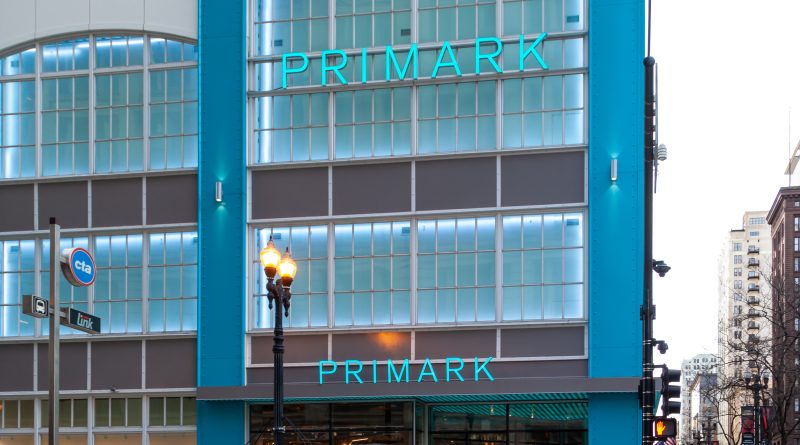
Primark bets big on New York with Herald Square flagship
Subscribe to our free newsletter today to keep up to date with the latest retail news.
Primark’s arrival in Manhattan represents more than another retail opening. The Irish fashion chain’s new Herald Square flagship marks its clearest attempt yet to establish itself as a mainstream force in the American apparel market, placing the company in direct competition with some of the most heavily trafficked fashion retailers in the country.
The retailer officially opened its four-floor, 54,000-square-foot store near Penn Station on May 8, drawing thousands of shoppers to one of New York’s busiest shopping corridors. The location carries strategic importance beyond size alone. Herald Square remains one of the few retail districts in the US where physical storefront visibility still carries global branding value.
For Primark, the move signals confidence in both the resilience of in-person retail and the growing appeal of discount-led fashion during a period when many consumers continue to pull back discretionary spending.
Primark chose Herald Square because physical retail still drives visibility and volume
Retailers have spent years reducing store footprints and prioritizing ecommerce efficiency. Primark continues to push in the opposite direction.
The company’s Manhattan flagship sits opposite Penn Station, an area that handles hundreds of thousands of commuters daily and remains central to New York tourism and retail traffic. The district already hosts major locations for Zara, H&M, Macy’s and Uniqlo, placing Primark directly inside one of the most competitive apparel environments in the US market.
That positioning appears deliberate. Primark’s business model relies heavily on high customer volume, low pricing and rapid inventory turnover. Large-format stores allow the retailer to showcase broad product ranges across womenswear, menswear, childrenswear, beauty and home goods while maintaining its value positioning.
The opening also demonstrates how some retailers now view flagship stores less as pure sales generators and more as marketing infrastructure. A major Manhattan location creates social media visibility, tourist exposure and brand legitimacy that smaller regional stores often cannot replicate.
Opening-day scenes reflected that strategy. Crowds formed outside the store before opening hours, with DJs, giveaways and branded activations turning the launch into a public retail event rather than a standard store opening.
That approach mirrors a wider shift across fashion retail, where physical stores increasingly function as experiential branding environments designed to generate online attention alongside foot traffic.
Affordable fashion is becoming a stronger competitive advantage in the US market
Primark’s timing may also reflect changing consumer priorities.
American shoppers continue to face pressure from elevated housing costs, higher borrowing rates and persistent inflation across household essentials. While inflation has cooled from its 2022 peak, many consumers remain focused on price sensitivity when purchasing apparel and discretionary items.
That environment has strengthened the position of value-oriented retailers across multiple categories. Off-price chains, discount retailers and lower-cost fashion brands have generally outperformed many mid-market competitors over the past two years.
Primark occupies an unusual position within that landscape. Unlike some discount chains, the retailer combines aggressive pricing with large-scale trend-driven merchandising typically associated with fast fashion competitors such as Zara and H&M.
The company’s Manhattan debut appeared designed to emphasize accessibility. Reports from opening day highlighted low-cost basics, budget denim and inexpensive seasonal fashion aimed at younger shoppers and families seeking lower-cost alternatives in one of the world’s most expensive retail markets.
The contrast between Primark’s pricing and Manhattan’s broader retail environment likely contributed to the strong public response. New York remains one of the most expensive shopping cities globally, particularly around Midtown retail corridors where flagship stores often prioritize premium positioning over affordability.
That creates a potential opening for retailers capable of combining scale, location and aggressive pricing without moving entirely into discount-store territory.
The Manhattan flagship reflects a broader expansion plan across the United States
Primark entered the US market in Boston in 2015, though its early American expansion moved slower than many analysts initially expected.
The retailer faced several structural challenges. US consumers already had access to established fast fashion brands, while the country’s large geographic footprint complicated store economics built around high-volume urban locations.
Over the past several years, the company has accelerated its expansion efforts, steadily increasing store count across the Northeast and other major markets. The Herald Square flagship represents the company’s 40th US location and its highest-profile American opening to date.
The decision to prioritize Manhattan may indicate that Primark now believes its brand awareness has reached a level capable of supporting larger destination stores.
The company also appears increasingly confident in the long-term role of physical retail. Unlike many apparel competitors that heavily emphasize ecommerce growth, Primark has historically focused on in-store shopping. Its limited online model keeps operational costs lower while encouraging high-volume purchasing behavior inside stores.
That strategy once appeared risky as ecommerce accelerated during the pandemic period. More recently, several retailers have rediscovered the value of physical stores as customer acquisition channels and brand-building assets.
Primark’s Manhattan launch arrives during a period when many retailers are reassessing the relationship between online efficiency and physical visibility. High-profile flagship locations still carry symbolic and commercial importance, particularly in cities where tourism, commuter traffic and international visibility intersect.
The Herald Square opening also reinforces how value retail continues to gain momentum inside premium urban markets. Consumers may still seek trend-led fashion and large-format shopping experiences, but affordability now plays a larger role in purchasing decisions than it did several years ago.
For Primark, Manhattan offers both opportunity and pressure. Success would strengthen its position as a serious national retail competitor. Failure would be highly visible in one of the world’s most scrutinized shopping districts.
Either way, the company’s arrival in Herald Square has already become one of the clearest retail signals of how consumer priorities are shifting in 2026.
Source