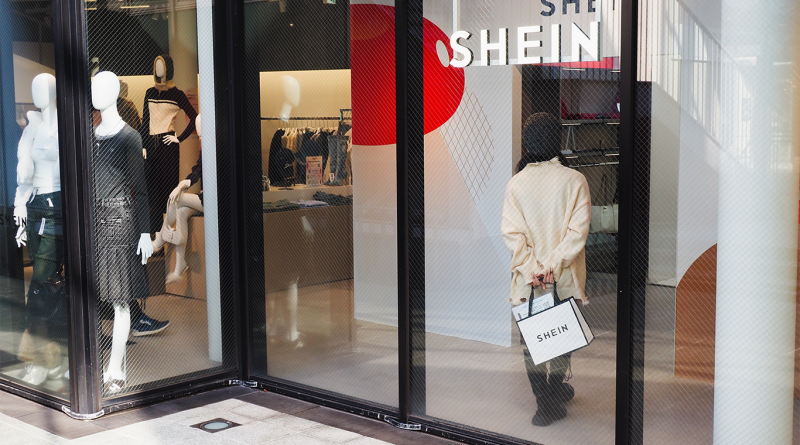
Shein’s Hong Kong IPO puts its supply chain under scrutiny
Subscribe to our free newsletter today to keep up to date with the latest retail news.
For years, Shein demonstrated what could happen when ecommerce demand forecasting, a large supplier network and low-cost cross-border fulfillment were combined at enormous scale. Now, some of the economics supporting that model are changing.
The fast-fashion retailer reported a $99 million net loss for the first quarter of 2026 as it prepared for a long-awaited Hong Kong listing. The result stands against the scale of the business. Shein generated $41.9 billion in revenue in 2025, up from $38.8 billion in 2024 and $32.1 billion in 2023.
The quarterly loss needs context. Shein attributed it mainly to a $328 million decline in the fair value of convertible redeemable preference shares. Its underlying profitability has weakened, too. Net profit fell from $3.4 billion in 2024 to $2 billion in 2025, with its net margin dropping from 8.7% to 4.9%.
Behind those numbers is a broader shift that matters beyond fashion. Governments are changing the rules governing low-value ecommerce imports, putting pressure on a fulfillment model built around moving inexpensive individual orders directly from production centers to consumers.
For manufacturers, logistics companies and ecommerce executives, Shein is becoming a useful case study in how quickly trade policy can alter supply chain economics.
Shein’s extraordinary growth is meeting economic friction
Shein’s competitive model depends on more than inexpensive clothing. Its rise has been tied to a supply chain designed to connect customer demand with manufacturing and fulfillment at considerable speed.
Rather than relying solely on the conventional fashion model of placing large seasonal orders months ahead, Shein became associated with small production runs and rapid replenishment. Products attracting demand could be reordered, and weaker sellers could be limited. The approach reduced some of the inventory risk inherent in traditional fashion retail. The fulfillment model was just as significant.
Shein has relied heavily on Chinese manufacturers and air freight to move products from China to customers in international markets. In the US, the economics of those shipments were supported by the de minimis exemption, which historically allowed qualifying low-value packages to enter without the duties applied to conventional imports.
That advantage weakened considerably when the US ended the exemption for low-value shipments from China and Hong Kong in 2025. Shein has acknowledged the consequences. In its listing disclosures, the company said it was considering measures including higher US prices to offset part of the additional duties and taxes.
The geographic composition of its business is changing at the same time. The US accounted for about 30% of Shein’s revenue in 2023, according to company disclosures reported by the Financial Times. By 2026, that proportion had fallen to 22%.
Shein has been investing in other markets since 2023 and has sought to diversify parts of its supplier network beyond China, including sourcing from Turkey. Yet most of its products continue to depend on Chinese manufacturing.
The economics of the low-value parcel are being rewritten
The pressure facing Shein is part of a much larger reconsideration of low-value ecommerce shipments.
On July 1, 2026, the European Union removed its customs duty exemption for ecommerce goods valued at €150 or less that are shipped from outside the bloc. A temporary €3 customs duty per item now applies until July 1, 2028, when the planned EU Customs Data Hub is scheduled to become operational.
When a product has a relatively high selling price, a few additional euros in customs costs may represent a manageable percentage of the transaction. For a retailer specializing in very inexpensive goods, the same fixed cost can represent a much larger share of the item’s value.
Companies can absorb some additional duties and accept lower margins, increase consumer prices, consolidate shipments instead of sending individual parcels across borders, hold more inventory in destination markets or move manufacturing closer to major customer bases.
Holding more inventory locally can reduce reliance on individual cross-border shipments, but it introduces warehousing costs and inventory risk. Moving production closer to consumers can shorten supply chains, but suppliers may not replicate the cost, capacity or responsiveness available from an established manufacturing network. Raising prices protects margins but risks weakening the consumer proposition that drove growth.
Shein’s challenge shows why customs policy has become a supply chain issue rather than simply a tax issue.
The company has demonstrated another way large shippers can manage volatility. Shein said long-term agreements with logistics partners helped limit its exposure to higher oil prices. Such contracts can provide some cost protection, but they cannot remove duties imposed by destination markets.
That distinction is becoming more relevant for companies whose international distribution strategies were designed around favorable treatment of low-value parcels.
The IPO will test more than investor appetite
Shein’s Hong Kong listing comes after a prolonged attempt to enter public markets. The company previously pursued listings in New York and London before turning to Hong Kong. China’s securities regulator approved its Hong Kong listing in July 2026, clearing a significant regulatory hurdle after years of uncertainty.
Shein reached a valuation of about $100 billion in a 2022 share sale before falling to about $66 billion in 2023. More recently, investors have reportedly pushed for a valuation closer to $30 billion.
The changing numbers reflect a company entering a different operating environment from the one in which it achieved much of its rapid international growth.
The central question for logistics and manufacturing executives is not whether Shein can preserve one particular customs advantage. It is whether the wider operating system can function effectively when that advantage disappears.
Its network still connects a large manufacturing base with consumer demand at unusual speed. Its scale gives it purchasing power, logistics volume and data that smaller competitors cannot easily reproduce. Those characteristics do not disappear when customs regulations change.
Networks built during an era of inexpensive direct international shipping may have to balance duties, inventory placement, manufacturing geography, transportation costs and delivery expectations at the same time.
Shein is one of the largest companies confronting that calculation in public.
Its Hong Kong IPO will give investors an opportunity to judge the financial consequences. For the wider logistics industry, the more consequential question is whether Shein can reshape the supply chain economics that helped make its growth possible.
Source:
CNBC