The Retailer’s Guide to Selling Diamond Jewelry
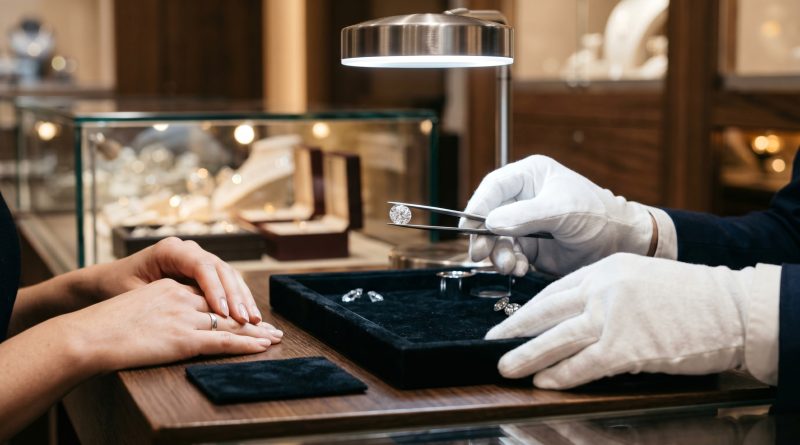
A customer slides her phone across the glass, showing two nearly identical rings with very different price tags and asks what sets the stones apart. You have a few seconds to answer without sounding defensive or pushy.
Selling diamond jewelry gets easier when a handful of clear facts about supply, sourcing and resale are always within reach.
Why the Natural vs. Lab-Grown Question Dominates Every Diamond Sale
The question keeps surfacing at your counter because it forces shoppers to weigh a noticeable price gap against ideas about rarity, investment and emotional value. Many arrive with screenshots and half-remembered claims, hoping you can sort fact from noise.
Part of the confusion is physical. Natural and lab-grown diamonds are essentially identical in chemistry and optics, so even trained eyes may struggle to separate them. The Gemological Institute of America (GIA) says professionals need specialized instruments such as the iD100® or lab testing to differentiate between natural and lab-grown diamonds, which is why staff education matters in your store.
Emotion shapes these conversations too. Botswana’s Minister of Minerals and Energy, Bogolo Joy Kenewendo, observes that “every one of them has a story associated with diamonds,” pointing to women who used them to escape the Holocaust and to weather hardship.
Those stories explain why a diamond purchase rarely feels like a simple transaction. A customer comparing stones may also be weighing a family milestone. Your answers land best when they respect both the facts and the feeling behind the question.
Are Lab-Grown Diamonds Mass-Produced, and at What Scale?
Lab-grown diamonds are mass-produced at an industrial scale. Factories now grow gem-quality stones on a repeatable basis, so the more useful question for your sales floor is how that output compares with what mines recover. Clear terms keep the comparison fair. Natural figures count rough diamonds recovered each year, while lab-grown figures count carats grown in reactors and presses.
According to The Diamond Collective, formerly known as the Natural Diamond Council, an industry-funded, nonprofit trade organization that markets and promotes natural diamonds, lab-grown diamonds are “mass-produced in potentially unlimited quantities within days or weeks.” This helps retailers explain why lab-grown output can respond more quickly to manufacturing demand than natural diamond supply can.
Lab-grown diamond output has grown quickly because production can be scaled using reactors and presses. Natural diamond supply works differently. Mines recover rough diamonds from finite deposits, and global output remains below earlier industry peaks. That distinction matters
for retailers since lab-grown supply can respond more quickly to demand, while natural supply is constrained by geology, mine lifespans and the share of recovered stones suitable for jewelry.
Analysts measure these figures differently, so treat the numbers as directional estimates. Headline carat figures also describe industry output, not what any one store sells, so present them as a measure of scale.
What Retailers Should Know About Resale and Trade-In Value
The supply gap between the two types shapes resale conversations. Natural diamonds form slowly and tend to come from a finite supply, while lab-grown diamonds come from factories that can raise output when demand rises.
According to The Diamond Collective, “the differential between natural and lab-grown has widened every year since 2015.” That difference may affect how each holds value over time, so keep expectations conceptual and omit specific figures. Avoid presenting any diamond as a guaranteed investment.
Lab-grown diamonds are mass-produced on an industrial scale, mainly in manufacturing hubs across China and India. Growers use two methods — high-pressure, high-temperature (HPHT) and chemical vapor deposition (CVD). According to GIA industry data, “China produced approximately 3 million carats (mostly HPHT)” in 2020, with India near 1.5 million and the United States near 1 million, mostly CVD.
GIA also observes that lab-grown supply has risen significantly in quantity, size and quality in recent years, which suggests the market may keep expanding. That trend makes it worth revisiting your talking points regularly.
Whatever your policy, explain trade-in terms before the sale so customers hear the same guidance from every associate. Written details give shoppers something to reference later and protect your credibility.
What to Tell Customers About Diamond Sourcing and Mining
Customers who ask about sourcing tend to appreciate clear, detailed answers over vague industry terms. Two facts cover most origin questions and keep the focus on today’s picture:
● Conflict-free rate: Governments, advocacy groups and the industry established the Kimberley Process in 2002 to control the rough diamond trade. GIA reports that 99% of diamonds are conflict-free today.
● Mining methods: Miners extract natural diamonds from the ground, and most diamond mines are open-pit, with fewer than 30% operating underground.
When a customer wants more detail, point to any grading report that accompanies the stone and invite questions about your suppliers’ documentation. Having those papers within reach shows you take origin seriously and keeps the answer factual.
How to Frame the Lab-Grown vs. Natural Conversation With Customers
These facts add up to a repeatable approach. Four habits keep the conversation honest and low-pressure:
● Start with their priorities: Ask what matters most, such as budget, origin, size or story, then let those answers guide which facts you share.
● Choose neutral words: Say “lab-grown” and “natural.” Terms such as fake, artificial or synthetic can make a customer feel judged.
● Lead with facts: Share the carat-scale comparison, the need for testing and the current conflict-free rate. Then let the customer draw conclusions.
● Admit what you don’t know: Offer to follow up on any question you can’t answer, because honesty builds trust faster than a guess.
A simple explanation can anchor the exchange. Telling a customer that both stones share the same basic chemistry, while differing in how they formed and how much of each exists, respects their intelligence and leaves room for the next question.
Frequently Asked Questions
Use these short answers as a quick-reference recap of the key facts for the sales floor.
Q: Can lab-grown diamonds be detected once they’re set in jewelry?
A: Reliable detection relies on specialized instruments such as the GIA iD100® or gemological lab testing, since the two stones are essentially identical in chemistry and optics. If a customer needs certainty about origin, send the piece to a lab.
Q: Are lab-grown diamonds mass-produced?
A: Lab-grown diamonds are mass-produced. Their resale varies by stone, buyer and market. Because natural supply is finite and lab-grown supply can scale, the two may hold value differently.
Q: Is it true that most diamonds today are conflict-free?
A: Yes. According to GIA, nearly all diamonds on the market today are conflict-free, thanks to the Kimberley Process, which was created to curb the trade in conflict diamonds.
Turning Diamond Knowledge Into Customer Confidence
Technical specifications matter most when they translate into something a customer can understand. A clear explanation of how diamonds form, where they come from and how they’re tested turns a spec sheet into a story worth owning.
Facts build the trust that brings shoppers back, so keep sharpening your knowledge and practice these answers with your team at your next meeting.
*Please note that this list includes sponsored content. Some of the companies, products, or services featured have entered into commercial agreements for placement. Sponsored placements do not necessarily reflect an endorsement and should be considered alongside other options in the marketplace.