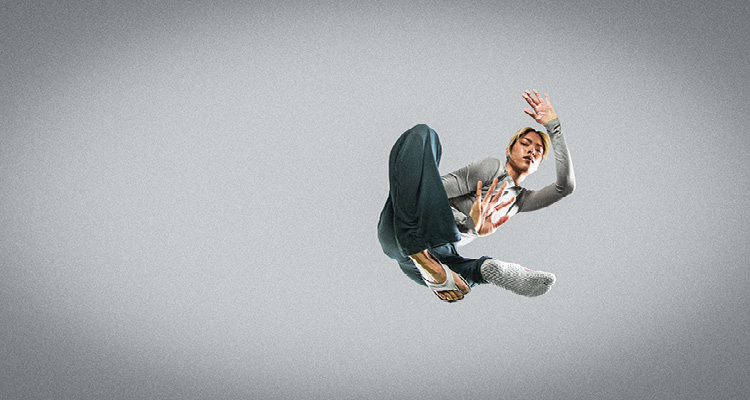
Vivobarefoot’s bespoke 3D-printed footwear aims to revolutionize foot health, sustainability and retail experiences
Founded on the simple insight that barefoot footwear is regenerative to human health, Vivobarefoot has built its brand around a radical conviction – the best shoe is as close to no shoe as possible. Galahad Clark, CEO and Founder of the barefoot shoe company, believes the industry is on the cusp of a fundamental shift. “Everybody is walking around in shoes that disconnect them from nature, don’t fit properly, and weaken and deform their feet,” he states. “That is the exact problem we’re addressing.”
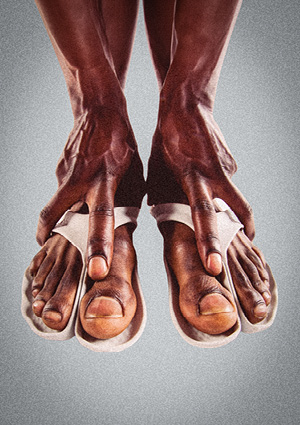
The recent launch of Vivo Biome – a 3D-printed, fully bespoke footwear system – is his answer to the problem. For retailers, it represents a model that could reshape how footwear is designed, sold and experienced. In May, Vivobarefoot launched the second iteration of Biome in Europe, in partnership with Carbon, a leading 3D printing technology company. The concept is straightforward in principle, if extraordinary in execution; customers have their feet scanned before having a pair of shoes printed specifically for them. The initial offering centers on sandals, with further styles to follow, and a US rollout is planned before the end of the year.
Galahad, who is also fondly known as ‘chief ecosystem officer’, tells Retail Merchandiser that Biome is the culmination of five years of research and development (R&D), and millions of pounds worth of investment. “A significant part of the R&D concerns the algorithm that translates a scan into an accurate 3D print, being both scanner-agnostic and printer-agnostic.” The goal is a system flexible enough to work across different scanning hardware and printing platforms – a scalable infrastructure rather than a proprietary closed loop.
In the near term, Vivobarefoot is building out a global network of scanning locations paired with local 3D printing facilities. The longer-term ambition is mobile scanning, where customers scan their own feet using a smartphone and production happens close to where they live. “We envisage a shoe industry that returns to localized, bespoke, person-by-person, foot-by-foot shoe making,” Galahad says. “Ten thousand years ago, humans made shoes from local sustainable materials. We think that’s ultimately the most sustainable and healthiest way to make shoes. Once people start wearing shoes that truly fit them, it will be something of a revolution. It becomes very hard to go back.”
Biome is also central to Vivobarefoot’s sustainability strategy. The brand simultaneously pursues two end-of-life initiatives – a natural pathway, in which shoes are biodegradable, and a polycircular one, in which polymer-based shoes are returned, broken down and remade into new product. Galahad maintains that 3D printing minimizes the distance between the two ambitions: “Biome provides a much more immediate circular solution. Manufacturing is far closer to the point of consumption.”
Supporting this philosophy is ReVivo, the brand’s recommerce and repair platform. In the past year alone, Vivobarefoot repaired and refurbished over 100,000 pairs of shoes, reselling them through ReVivo with a clear brief: none of its products end up in landfill. Operations are currently running in England and Amsterdam, with facilities under development in Japan and the US.
The wider business is in a period of deliberate structural change, moving from what Galahad describes as “a single-source, single-channel business” to a model built across three regions – the Americas, EMEA and APAC – with retail, wholesale and digital operating collectively. In addition, new stores have opened in Bristol and London, with a second London location and a flagship New York store both imminent. In Asia, Japan has emerged as a standout market, with three concept stores, and a China launch is among Vivobarefoot’s major projects for 2026, while in Europe, Germany and the broader DACH region have driven solid growth. However, Galahad recognizes that the explosion of lower-priced barefoot brands is reshaping the competitive landscape globally, with a reported 30 new entrants in the Czech Republic and Slovakia alone. “The question is no longer why barefoot,” he acknowledges. “It’s why Vivobarefoot.”
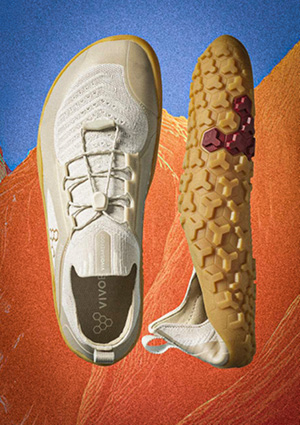
Alongside Biome, Vivobarefoot is building out what is essentially a foot health platform. The brand’s scanning technology is being used to develop an AI diagnostic tool that tracks how customers’ feet change over time, which Galahad highlights is an important proposition as feet measurably strengthen and reshape when freed from conventional footwear. A range of foot health accessories including massage balls, sensory wobble boards, toe spacers and strengthening bands are expanding the company’s offer beyond shoes. Other product highlights include the Sensus lifestyle range, which is fully grounded and conductive, allowing the body to exchange electrical charge with the earth; the Motus Tabi, a split-toe training shoe developed with calisthenics experts; and the Ecological Survival Collection (ESC) – a range of specialist outdoor boots for environments from the Arctic to the desert. In accessories, the Made in Mongolia project continues to grow, encompassing a social enterprise working with a women’s collective to produce felt slippers and socks from natural Mongolian wools.
Vivobarefoot’s priorities for the next five years converge on two ideas: how shoes are made, and how they are sold. On production, the brand has an extremely clear-cut direction, comprising of local additive manufacturing, with Biome as the proof of concept. Regarding retail, the goal is a joined-up customer journey that begins with a foot scan and health diagnostic and unfolds across multiple touchpoints. “Whether your first interaction is in a store in Tokyo or online in America, you have a multi-year, multi-touch-point reconnection to nature and to your body through your feet,” Galahad reveals.
For retailers considering the brand, that vision carries practical implications. Vivobarefoot is not positioning itself as a volume footwear company. It is building a premium, health-led, experience-driven proposition, where the store is a gateway to a longer relationship – not simply a point of transaction. As Biome moves from Europe to global markets, and the scanning network expands, the in-store experience is likely to become an increasingly important part of that story. “We’re ultimately a challenger brand and we’re trying to do things differently to the way most key businesses are doing it, under the moniker of free your feet,” concludes Galahad. “A big part of Vivobarefoot is bringing people’s feet back to life.”