Why Some Retailers Are Building Their Own Power Grids
A grid outage used to mean a dark storefront and a lost afternoon of sales. Today, a growing number of retailers are trying to make those disruptions less costly by investing in microgrids. Grocery chains, big-box retailers and convenience operators across the country have started installing these localized systems, which can generate and store electricity on-site and disconnect from the utility grid when something goes wrong.
Rising Electricity Costs Are Changing the Math on Backup Power
Retailers have watched their electricity bills climb steadily for several years. Retail electricity prices have increased faster than inflation since 2022, and the Energy Information Administration expects this trend to continue through 2026 as generation and infrastructure costs keep rising.
Potentially, much of that pressure traces back to surging demand from data centers and electrification, which is driving commercial electricity consumption upward even as prices climb. For a retailer running dozens or hundreds of locations, a microgrid that generates and stores a meaningful share of a store’s own power starts to look more and more like a strategic hedge against a bill that keeps getting bigger every year.
Grid Reliability Has Become an Operational Risk, Not Just an Inconvenience
Grid reliability has become so unpredictable that some retailers have stopped treating outages as rare events. Microgrid adoption in Texas accelerated after Hurricane Harvey, with businesses such as Buc-ee’s and H-E-B adding microgrids to increase reliability and mitigate the high cost associated with power outages.
The value in these cases goes beyond just avoiding spoilage or lost sales during a single storm. It’s the ability to remain a functioning resource for a community when that community needs groceries, air conditioning and a place to charge a phone.
Sustainability Commitments Are Pushing Retailers Toward On-Site Generation
Retailers under pressure to show real progress on emissions have found that a microgrid built around solar and battery storage does double duty, cutting both operating risk and carbon footprint at once.
The EPA’s Green Power Partnership tracks this shift directly, and its top 30 retail partners collectively purchase close to 13.4 billion kilowatt-hours of green power annually, an amount equivalent to the electricity used by more than 1.2 million average American homes.
On-site generation through a microgrid lets a retailer count toward that level of commitment while simultaneously building the resilience case that finance and operations teams genuinely care about, which is part of why the two arguments are increasingly made in the same boardroom meeting.
What Microgrid Adoption Actually Looks Like in a Retail Setting
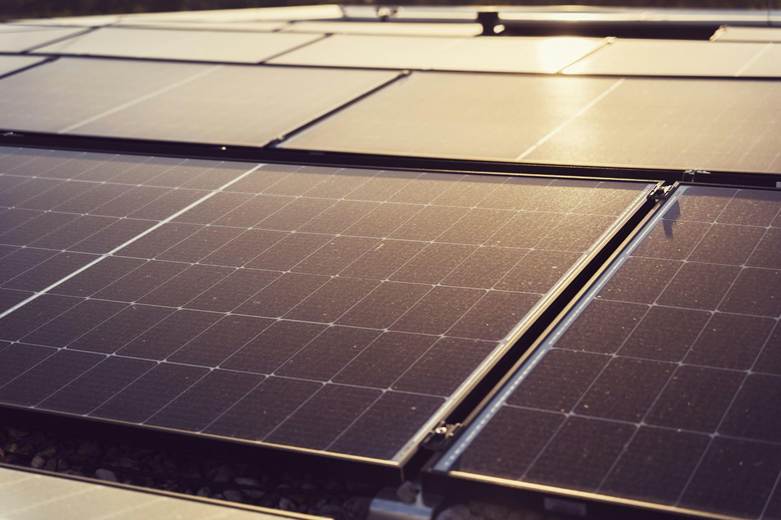
A retail microgrid typically combines an energy generation source, such as solar panels or a natural gas generator, a battery storage system that stores excess power for peak-demand periods or during outages, and a control system that automatically switches the site between grid-connected and island modes when the main grid fails.
This control layer is what makes the transition invisible to customers standing in a checkout line, since the system can detect a grid failure and switch to independent operation before most shoppers notice anything changed.
The Department of Energy has also emphasized the cost-control case for microgrids, noting that they can help reduce retail electricity costs through peak demand charge reduction, time-of-use optimization, fuel savings and improved system efficiency. For retailers with large refrigeration loads, HVAC demand, lighting systems and long operating hours, those savings mechanisms can make microgrids more than just an outage-prevention tool.
Weighing the Investment Against the Long-Term Return
Designing and installing a commercial microgrid entails real capital costs, and retailers considering the investment must weigh these against the savings that accrue over the years.
The return shows up in a few concrete places, namely electricity generated and stored on-site rather than purchased at peak utility rates, along with avoided losses from spoiled inventory and lost sales during outages. Some markets see revenue from selling excess power back to the grid when the store doesn’t need it. Retailers that have already made the leap are increasingly treated as the proof of concept the rest of the industry is watching before committing capital of their own.
The Bigger Shift Behind the Decision
Building a private power system used to be something only hospitals, universities and the military bothered with. Retailers are now making the same calculation for a much more ordinary reason — keeping the lights on and the registers running is no longer something a store can take for granted. As electricity costs keep climbing and grid reliability keeps wavering, the retailers moving early on microgrids aren’t chasing a trend so much as protecting a business model that depends entirely on staying open.
*Please note that this list includes sponsored content. Some of the companies, products, or services featured have entered into commercial agreements for placement. Sponsored placements do not necessarily reflect an endorsement and should be considered alongside other options in the marketplace.