Why Walmart’s Subway partnership could reshape the restaurant delivery market
Subscribe to our free newsletter today to keep up to date with the latest retail news.
For years, Walmart has been quietly building one of the most extensive last-mile delivery networks in the United States. What began as a response to Amazon’s growing influence has evolved into something much broader. The retailer can now deliver groceries, household essentials, pharmacy products and general merchandise to most American households within hours, and in some markets within 30 minutes.
Its latest move suggests the company believes that network can support something else: restaurant delivery.
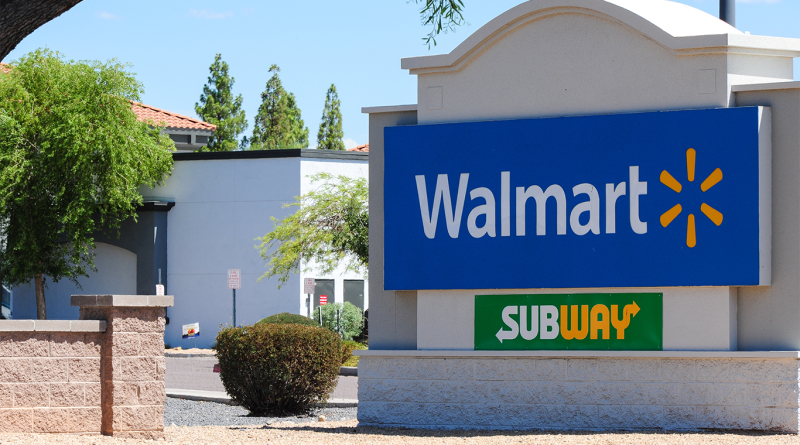
Walmart recently announced that customers in select markets can order Subway directly through the Walmart app and Walmart.com, either as a standalone purchase or alongside a grocery order. The rollout is initially available in Connecticut, Florida, Georgia, Ohio, Pennsylvania and Texas, with plans to expand to roughly 1,400 locations by the end of the summer. Subway remains Walmart’s largest in-store restaurant partner, making it a logical starting point for the initiative.
At first glance, the move may appear modest. Yet beneath the surface, it represents a potentially significant strategic challenge to established food delivery platforms such as DoorDash and Uber Eats.
Walmart’s advantage is not restaurant delivery. It is convenience aggregation
DoorDash and Uber Eats were built around a relatively simple proposition: connecting consumers with restaurants and delivering meals quickly.
Walmart is approaching the market from a different direction.
Rather than creating a dedicated food delivery platform, Walmart is integrating restaurant meals into a broader commerce ecosystem. Customers can add a Subway sandwich to the same basket as groceries, cleaning products, pet food or a forgotten household item. The entire order can then arrive in a single delivery.
This distinction matters.
Consumers increasingly value convenience, but convenience is not always about speed alone. Often, it is about reducing the number of separate decisions and transactions required throughout the day.
Walmart executives have repeatedly emphasized this point. The company views the future of retail as bringing more everyday needs into a single shopping experience. By combining meal delivery with grocery fulfillment, Walmart is addressing a customer need that traditional restaurant delivery platforms cannot easily replicate.
Early testing appears to support that thesis. Walmart executives reported that many customers ordering Subway were also purchasing groceries and other household products in the same transaction.
For DoorDash and Uber Eats, this creates a challenge. Their platforms excel when consumers want a meal. Walmart’s model becomes attractive when consumers want a meal and several other things at the same time.
The distinction may seem subtle, but it changes the competitive landscape considerably.
A delivery network built before the opportunity arrived
Another reason Walmart could emerge as a serious competitor is that much of the required infrastructure already exists.
Unlike most restaurant delivery platforms, Walmart is not building a delivery network from scratch. The retailer has spent years investing in stores, fulfillment technology, driver networks and delivery capabilities. More than 4,600 Walmart locations now function as mini fulfillment centers, allowing products to be picked and delivered close to customers.
That footprint creates significant operational advantages.
Food delivery companies must often coordinate between restaurants, drivers and consumers across fragmented networks. Walmart, by contrast, already controls much of the customer relationship, the digital ordering experience and the delivery logistics.
The Subway integration is also benefiting from proximity. Since Subway locations are physically located inside many Walmart stores, the retailer can coordinate restaurant preparation and delivery routing far more efficiently than a third-party marketplace. Executives have said the platform already uses AI to manage restaurant preparation times, picking schedules and delivery routing.
This operational efficiency could help Walmart keep costs under control in a sector where profitability has historically been difficult to achieve.
Restaurant delivery remains a notoriously challenging business. DoorDash and Uber Eats have spent years balancing customer acquisition costs, driver incentives and restaurant commissions. Even as the market has matured, margins remain relatively thin.
Walmart enters the category with a different economic model. Delivery does not need to generate profit solely from the sandwich. It can drive larger basket sizes, increase Walmart+ membership value and encourage greater customer loyalty across the broader retail ecosystem.
Subway may be only the beginning
The most important aspect of the announcement may not be Subway itself.
Walmart executives have been unusually transparent about their longer-term ambitions. The company has indicated that additional in-store restaurant partners could eventually join the platform. Beyond that, executives have openly discussed the possibility of extending delivery capabilities to restaurants located outside Walmart properties.
Greg Cathey, Walmart’s senior vice president of digital fulfillment transformation, noted that almost every major quick-service restaurant brand operates within five miles of a Walmart location. That geographic reality creates an enormous potential addressable market.
If Walmart successfully expands beyond Subway, the implications become far more significant.
Rather than serving as a retailer that happens to deliver restaurant food, Walmart could evolve into a hybrid commerce platform capable of fulfilling groceries, household goods and restaurant meals from a single app.
That begins to resemble a “super app” strategy, one that seeks to consolidate multiple categories of consumer spending into a unified digital experience.
The challenge for DoorDash and Uber Eats is that Walmart does not necessarily need to win the entire food delivery market to create pressure. Even capturing a portion of meal occasions that are currently fulfilled through third-party apps could have meaningful consequences.
Why DoorDash and Uber Eats still have reasons for confidence
None of this means Walmart is destined to dominate restaurant delivery.
DoorDash and Uber Eats maintain substantial advantages of their own.
Both companies possess extensive restaurant partnerships, highly developed delivery technology and strong consumer awareness. They offer enormous restaurant selection, something Walmart currently cannot match.
Consumers seeking local restaurants, independent operators or niche dining experiences will still find much greater choice on dedicated food delivery platforms.
There is also a question of consumer behavior. Many people instinctively open DoorDash or Uber Eats when deciding what to eat. Changing those habits may prove more difficult than simply introducing a new service.
Moreover, restaurant delivery is increasingly becoming a platform business driven by scale and network effects. DoorDash and Uber Eats have spent years refining their marketplaces and building relationships with restaurant operators. Walmart will need to demonstrate that it can provide similar value if it expands beyond its existing in-store tenants.
Yet Walmart does not necessarily need to replicate their model.
Its opportunity lies in creating a different category altogether, one that blends meal delivery with general retail fulfillment.
That positioning could be particularly attractive during periods of economic uncertainty, when consumers are looking to maximize convenience while minimizing fees and transactions.
The Subway rollout may appear small today, but it offers a glimpse into a much larger strategy. Walmart has spent years building a delivery network capable of reaching most American households. The addition of restaurant meals transforms that network from a retail asset into a broader convenience platform.
If the company successfully expands to additional restaurant partners, DoorDash and Uber Eats may find themselves competing against a rival with something few others possess: a nationwide store network, an established customer base and the ability to combine dinner, detergent and groceries into a single delivery.
In the battle for convenience, that may prove to be a powerful combination.
Sources: